


The Permanent Uprising
Transforming mobilization into organization through the commune
Émile Marti

September 2025, Nepal. Smoke, tear gas, shouts, stones flying, small groups of young people gathering and forming a massive human tide. A powerful wave surges towards the presidential palace. The gate is quickly toppled; some wave the “One Piece” flag, people take videos to capture these moments of joy.
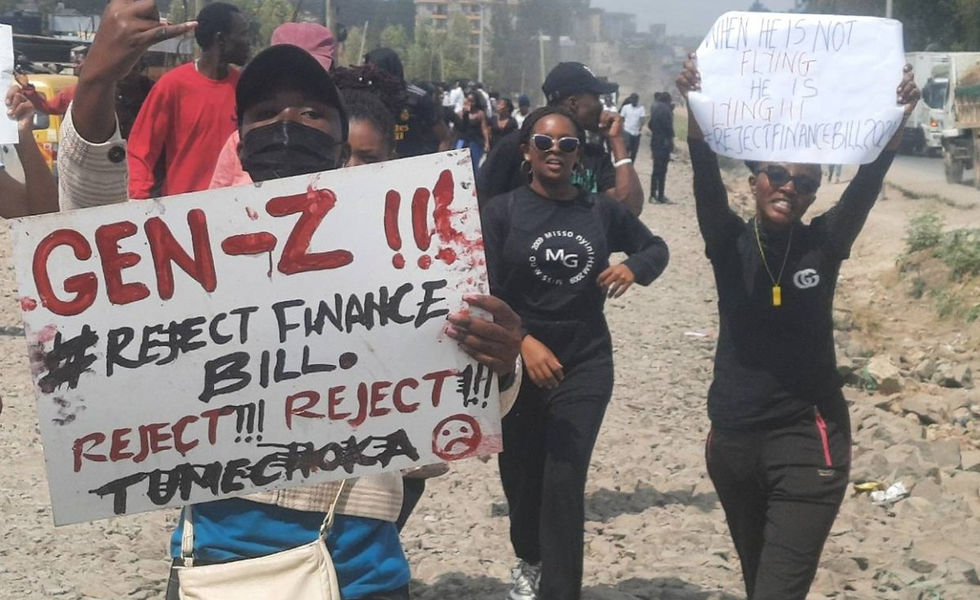
Starting from Indonesia and Nepal in August 2025, then spreading to the Philippines, Madagascar, Morocco, Peru, and Bulgaria, we have witnessed in recent months a new phase in the global youth struggle. The media—and the youth in struggle themselves—have spoken of a “Gen Z uprising.” How can we understand these revolts? What lessons can we draw for the period ahead?
Through the Gen Z identity, today’s youth has been portrayed in the media as alienated in the virtual world, selfish, and apolitical. In this way, the system hopes to neutralize youth before it can even pose a threat to its existence. The goal is to drain its revolutionary potential and create a paralyzed, pacified youth, incapable of thinking or creating change. Capitalism seeks to domesticate us so it can better exploit us for its own interests, reducing our lives to studying, work, and production.
This is nothng new: the powerful have always sought to attack and exploit youth, to disconnect it from previous generations, to make its struggle illegitimate. In response, youth has always defended itself and will continue to revolt. From Kathmandu to Rabat, young people have risen up massively in recent months, reclaiming the identity of struggling youth and transforming it into a collective, unifying force.
Chronology of a New Global Wave of Struggling Youth
In August 2018, Greta Thunberg launched the climate strike, within months marches gathered hundreds of thousands of young people across all continents. A new generation took to the streets and questioned the entire system. In 2020 and 2022, the murders of George Floyd and Jina Amini trigger mass movements in which youth played a vanguard role. The slogans of these uprisings—“Black Lives Matter” and “Jin Jiyan Azadî”—still resonate today.
In 2022, the “Aragalaya” (the struggle) protests forced Sri Lankan President Gotabaya Rajapaksa to flee after just a few weeks. Youth revolts against a system where the family interests of those in power override the common good. Two years later, in June 2024, Kenyan youth rose up massively against a finance bill, which was ultimately withdrawn. At the same time, Bangladesh becomes the epicenter of a youth uprising. A few months later, in November 2024, Serbia erupts, with students leading a massive revolt movement.
A wave sweeping from Asia to Eastern Europe

But the most recent and intense sequence begins in August 2025 in Indonesia. This time, the movement starts in the countryside, where peasant groups mobilize against a land tax increase. For the first time, the “One Piece” flag is raised as a symbol of the “Generation Z” uprising. If this new phase of struggle begins in Indonesia, it is in Nepal that it draws worldwide attention. Online contestation of the ruling class’s corruption by youth had become too widespread, so the government decides to block access to major social networks. That was the final straw.
On September 8, students and young workers take to the streets, and the next day the president flees; official buildings and those of major companies are set on fire, the presidential palace is stormed. The intensity of the uprising spreads far beyond Nepal’s borders. At that moment, for young people around the world, the question becomes: “If they can do it in Nepal, why couldn’t we do the same here?”
The rapid victory in Nepal restores confidence and strength to youth across all continents—youth that the system had tried, in vain, to neutralize. In the following days, young people take to the streets in the Philippines, Timor-Leste, Madagascar, and Morocco. In the months that follow, the wave reaches South America with uprisings in Peru, and Europe with the fall of the government in Bulgaria.
Why is “Gen Z” revolting?
“The conflict of generations can and must be resolved in social conflict; conversely, it thus becomes a factor of movement and progress. The young generations find in the collective movement the solution to their difficulties, and by choosing the movement, they accelerate it.”
Albert Memmi – Portrait of the Colonized
Gen Z is the most educated generation but also the one facing the highest unemployment and debt. As young people, we find ourselves in a position where building the present is impossible, and projecting ourselves into the future seems equally out of reach. Climate disasters and war are brutal realities that many of us experience directly. In Global South countries, youth makes up the largest part of the population: the median age in Kenya is 20, in Nepal 25.
Previously, the system claimed to offer material comfort or recognition in exchange for exploitation. Today, it no longer even bothers with appearances; it provides no answers or perspectives for youth. Especially in the South, the only contact with the state comes through its bureaucracy and militarized police. For those who insist on a dignified life, the corruption of state institutions and the violence of capitalism become unbearable.
Social medias amplify and accelerate the youth’s strong capacity for mobilization—a mobilization that turns individual anger into collective street action. Beyond these characteristics specific to this generation, the Gen Z revolt is the most recent expression of the continuous historical struggle of youth. Youth is the most dynamic part of society; it has always played a vanguard role in social change. Being young is a way of approaching life: questioning everything, seeking freedom, being ready to give everything for one’s ideas!
“Living without principles makes you age. Youth means necessarily being forced to live consistently. When I was a child I said, ‘If you live, then either free or not.’ I rejected a life without freedom.” ¹
Abdullah Öcalan
Shortcomings to overcome
The absence of clear, collectively shared ideas weakens Gen Z. As a new generation in struggle, we must develop our own model of alternative life if we truly want to overcome capitalist modernity. Anarchism, feminism, national liberation movements, Marxism, Leninism, Maoism, and previous episodes of class struggle have created an extremely important history of resistance. However, as struggling youth, we need thinking adapted to the 21st century to make our gains permanent and sustainable.
A vision based on women’s liberation, grassroots democracy, ecology, and political consciousness is a necessity. Without resolving the patriarchal question, no radical solution is possible—the patriarchy being the foundation on which all power systems are built. Faced with the collapse of living systems, an ecological and communal paradigm has never been more necessary.
A communalist strategy to ensure victory
“In the past, resistance was offered in order to overthrow the opposing side and to establish one’s own rule in its place. Today, however, the build-up precedes the resistance. Wherever the possibility exists, building up takes place immediately. If there is an attack on it, one defends oneself, resists and fights when necessary.”
The Manifesto of the Youth – Revolutionary Youth Movement of Kurdistan
As in the time of the 2011 Arab Spring, Gen Z uprisings are spontaneous, and in the absence of an alternative similar regimes to those overthrown quickly return to power. Politics can’t accept a vacuum. Movements that base their hopes for change solely on the state are quickly co-opted: the capitalist system is organized enough to withstand government changes and reforms. The situations in Nepal and Bangladesh, among others, demonstrate this.
On the other hand, thinking it possible to free oneself from the state simply by rising up is a dangerous illusion. The communalist strategy opens a path between these two approaches. Neither total rejection of the state nor illusory expectation: it is society and it’s democratic self-government that are placed at the center.
The process for peace and democratic society, initiated by Abdullah Öcalan from İmralı prison island on February 27, 2025, is a living embodiment of this new path toward emancipation, which can inspire peoples worldwide. Dialogue with the Turkish state has halted military attacks and opens new possibilities for struggle, where society becomes directly involved in building its own grassroots self-governance. The attacks on the Rojava revolution in January 2026 demonstrate the threat these ideas pose in practice to the hegemonic system.
In Serbia, the revival of Zborovi—democratic grassroots assemblies—alongside mass mobilizations is an important example.² A few days after the government’s overthrow, “Gen Z Madagascar” announced in their charter that “Institutional overhaul must emerge from a collegial reflection on a new system based on needs and aspirations collected from local communities (fokontany/commune),” and that a new social contract based on the principle of Fihavanana (Malagasy tradition of communal mutual aid) should be developed.³
At the end of February 2026, in continuity with the previous months’ uprisings, Indonesian youth organize the Saba Kampung Festival, with the slogan “Revitalizing the Commune Amidst Forced Modernity.” Their first objective: “Rehabilitate Living Spaces as Holistic Socio-Cultural Ecosystems. Restore the village’s function as a democratic living space—not just a geographical location—where social relations based on gotong royong (mutual aid), musyawarah mufakat (consensus decision-making), and respect for diversity (a democratic nationhood) are actively practiced.” The festival should also “Serve as a Laboratory for Alternative Living for Youth.”
Wherever possible, we can start building our new way of life from the grassroots today through a process of communalisation. Uprisings can accelerate history, but they cannot be victorious without slow, continuous construction in parallel. We should stop addressing only the state with our demands and regain awareness of our own strength as an organized society.
Perspective for a worldwide youth revolution
In Greek philosophy, Kairos describes the “critical moment,” the instant one must recognize and seize when it arrives. It is also described as a small flying god: when it passes before us, we either fail to see it, see it and let it pass, or grab it and seize the opportunity.
The year 2026 began simultaneously with the abduction of Nicolás Maduro in Venezuela and the start of new attacks on the Rojava revolution. Trump has threatened to invade Greenland and Cuba, and Macron recently declared that the coming period would be “a half-century of nuclear weapons.” On February 28, a new US-Israel military operation began against the Iranian regime, which, as we write, is turning into a regional war affecting all the peoples of the Middle East. With the US in the lead, Western forces have clearly stated their intentions for the new year: to launch a major offensive against all forces—democratic or authoritarian—that refuse to submit to their imperialist plans.
This situation does not demonstrate their strength but reflects the existential crisis the capitalist system is going through. These attacks also show their fear in the face of peoples’ resistance. The international “Gen Z” uprising has created a new context: for the first time since 1968, struggling youth around the world are once again aware of belonging to the same dynamic of revolt; they openly claim this connection and turn it into a strength.
We must not let this opportunity pass. The idea of a worldwide democratic confederalism of youth can transform this collective youth consciousness into an organized force.
By combining grassroots communalist construction with the confederation of all existing initiatives into an alternative system, and with an internationalism among the youth of all continents, we can become a force capable of intervening and putting an end to the ongoing world war!
[2] Zborovi, direct democracy council, Serbia: https://berlinergazette.de/the-politics-of-zborovi-councils-direct-democracy-and-the-specters-of-revolution-in-the-balkans/
[3] Gen Z Madagascar Charter: https://drive.google.com/file/d/1f700Tl3kP7SnlNvxEXQwkasmrSJdHP0o/view


Comments