


Beyond "Gen Z": Defending Revolutionary Youth Spirit
Internationalist Young Women Perspective

Generation Z, a recognizable group of kids and teens who are constantly the center of attention.” Hardly a week passes without a fresh headline stigmatising us. We are said to be lazy, fragile, and addicted to our phones. The ruling system undertakes enormous efforts to shape and control our collective consciousness, constantly bombarding society with oppressive narratives. These narratives are designed to distract us from our own, alternative consciousness and to bind us to the status quo.
What purpose do narratives like the Gen Z narrative serve? If we approach these theories not as passive objects of study, but as revolutionary youth, we must ask: does the category “Gen Z” genuinely reflect our reality, or is it simply a tool to confine and limit us?
Generational and Gen Z Theory
Generational theory rests on the premise that history follows a rhythm. According to generational theory, societies move through recurring cycles shaped by successive age cohorts. Each generation is said to develop a distinct mindset, formed by the political and cultural conditions of its upbringing. As one generation ages and another enters adulthood, a new historical phase allegedly emerges. Change appears not as the result of organized struggle, but as the automatic turning of a historical wheel. At first glance, this seems convincing. Youth has repeatedly stood at the center of historical ruptures. Yet generational theory reduces this role to a structural rhythm. What could be conscious political intervention is reframed as the automatic turning of a historical wheel.
Within this framework, “Generation Z” refers to those born roughly between 1995 and 2010. We are described as the first fully digital generation, shaped by smartphones, social media, economic instability, climate crisis, and pandemic. We are called digitally fluent and permanently connected. We are described as socially progressive, concerned with climate justice and gender equality. Yet when we mobilize, our clarity is dismissed as naïve idealism or extremism. We are also told we are fragile. Rising anxiety and depression are individualized rather than linked to war, debt, precarious labor, and ecological collapse. And perhaps most persistently, we are accused of laziness — as if refusing exploitation were a character defect rather than a rational response to systemic injustice.
On the surface, generational categories appear neutral. In reality, they flatten historical complexity. Frameworks derived largely from Anglo-American contexts are exported as universal models, ignoring class, colonial histories, and political realities across the globe. The result is depoliticization. If generations merely follow a script, youth ceases to be a historical subject. The constant repetition of labels — lazy, sensitive, radical — shapes self-perception. Narratives do not merely describe youth; they attempt to define and discipline it.
Revolutionary Youth Spirit Instead of “Gen Z”
And yet, beneath these distortions lies a truth: when youth enters history, history shifts. Not because of mystical cycles, but because youth occupies a distinct social position. To understand youth as a social category is inseparable from understanding history and society itself. Society is not static; it moves through stages of transformation. Change and development are its most fundamental characteristics. Youth, by its very nature, embodies this dynamic. The youth represents the vitality of social nature. It is mobile, restless, unwilling to remain confined. It seeks to make its voice heard in the furthest places. Its energy is not easily exhausted. Its attitude toward life is questioning, searching. The time of youth is comparable to spring in the seasonal calendar. Just as nature transforms in spring, human life in youth contains an immense openness toward change. Everything appears possible; nothing is fixed.
But awareness of this role is decisive. Without consciousness of its historical mission, youth can be absorbed and neutralized. A youth unaware of its social function cannot be free or autonomous. A clear identity of youth is therefore a fundamental condition for a free life.
Definitions developed thus far about youth, like the Gen Z narrative, have largely been linked to roles attributed by the dominant system. The rulers have invented a whole range of terms — rebellious, irresponsible, apolitical, extremist, consumerist — not to understand youth, but to neutralize it. They know as well as we do that whoever wins over the youth wins over society. A youth surrendered to the system guarantees the system’s future, because youth means future. For this reason, youth has always occupied a special place in historical struggles. It has played pioneering roles in moments of social development. Where societies were open to change rather than clinging to conservative stagnation, youth became the most active and effective force of transformation.
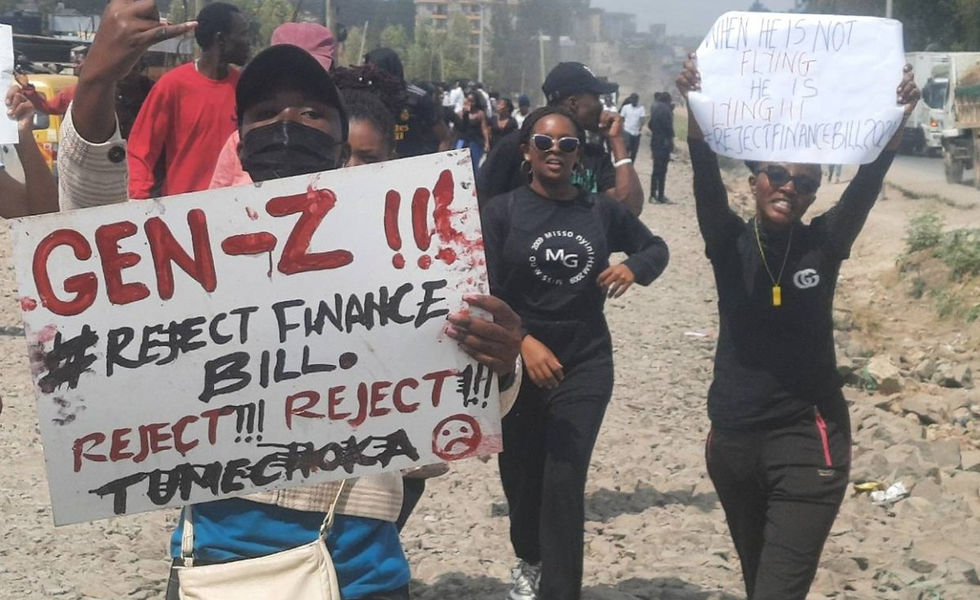
At the same time, history also shows that youth can be manipulated and mobilized for reactionary ends. Its dynamism can serve liberation or domination depending on its level of consciousness and organization. Thus the question is not whether youth is powerful, but in whose interest this power is directed. Today’s uprisings — such as those in Nepal, Bangladesh, Madagascar, Indonesia, Kenya, Morocco, and beyond — demonstrate that youth continues to emerge as a decisive actor. Young women like Deniz Ciya have proven this with their lives. These uprisings are not expressions of generational temperament. These „Gen Z uprisings“ are expressions of a social force confronting structural crisis inherent in the current system.
To defend revolutionary youth spirit means deepening organization. Spontaneous uprisings reveal vitality, but sustained transformation requires ideological clarity, internationalism, democratic leadership, and a commitment to women’s freedom as foundational. Without these, youth energy risks fragmentation. Recent youth uprisings — whether in the form of environmental justice protests, labor movements, or uprisings against authoritarian governments — are proof that youth worldwide are not only responding to a set of circumstances; they are consciously and collectively rejecting the narratives that seek to define them. Thus, it is crucial to analyze what transpired, and draw lessons from these uprisings, particularly in the context of building a global youth democratic confederalism. For the power of youth movements is interconnected, despite being geographically distant.
In this context, the term Gen Z also holds potential for reclamation: in uprisings like those in Nepal and Morocco, it has been self-appropriated to both strengthen local revolutionary movements and forge connections with youth in struggle worldwide, rekindling an international youth consciousness.
The Perspective of the Young Woman
Within this struggle, the position of the young woman is decisive. The exploiting capitalist system assigns her a peculiar mission: to have no mission at all. She is encouraged to pursue individual success, aesthetic conformity, and silent adaptation. Her political voice is trivialized; her anger is pathologized. Yet at the core of the young woman’s identity lies a resistant and militant spirit. She carries within herself not only the vitality of youth but also the historical memory of women’s resistance. To awaken this spirit requires conscious organization.
The young woman must insist on organizing an education within the perspective of the Democratic Nation1 — an education that strengthens collective ethics, historical awareness, and political responsibility. She must question everything in the existing system: the roles assigned to her, the images imposed upon her, the limits drawn around her dreams. Questioning, however, must not remain individual. Her reflex must be organized. Thus, it is up to the young woman to shatter the perception created by capitalism about her and her people. She must develop new political methods and ways of participation. She must bring her own creativity and revolutionary nature into politics as a determining force.
When the young woman organizes, she does not merely defend herself. She transforms the entire youth movement. For without women’s freedom as a guiding principle, no revolutionary spirit can sustain itself. For instance, the Sandinista revolution in Nicaragua and the Soviet Union under Stalin both demonstrated how patriarchal dominance within the movement not only limited women’s contributions but undermined the revolution as a whole. In these contexts, the refusal to elevate women’s roles within the revolution ultimately led to the decline of socialism. The lessons learned from these failures highlight the importance of integrating women’s leadership into the heart of revolutionary struggles.
The Youth is the Future
Despite all the talk surrounding Gen Z, the youth is not merely a marketing demographic. It is not just a demographic trend. It is the most dynamic expression of society’s capacity for renewal. If society’s essential characteristic is change, then youth — as the embodiment of openness to change — becomes its most active component. Because the system understands our potential, it categorizes, criticizes, and humiliates us. A depoliticized youth is its guarantee of continuity. A conscious, organized youth is its greatest challenge.
To defend revolutionary youth spirit is therefore to defend the future. To defend the future requires clarity about who defines us and why. It requires rejecting imposed identities and constructing our own. It requires recognizing that youth, aware of its historical role, becomes a vanguard actor of transformation. We are not a fixed archetype in a recurring cycle. We are a living force shaped by struggle and organization. We do not merely follow history’s rhythm, we have the capacity to break it.
As long as young people refuse the imposed image and organize around their own understanding of freedom, dignity, and collective life, the spirit of youth will remain irreducible. And as long as this spirit remains conscious and organized — especially through the leadership and liberation of young women — youth will continue to be not the object of history, but its driving wheel.
[1] The concept of a Democratic Nation, as proposed by Abdullah Öcalan, envisions a society where cultural diversity and democratic principles are embraced through decentralized governance and collective self-determination. It calls for a transformation of the nation-state into a system based on democratic confederalism, women‘s liberation, and social ecology.


Comments